Saddle stools, kneeling chairs, and perch stools all solve the same problem in different ways. A standard office chair holds your hips at roughly 90 degrees, and that angle loads the discs in your lower back hour after hour. Raise the hips above the knees and the pelvis tips forward on its own, which restores the natural inward curve of the lumbar spine. Researchers at the Cornell University Ergonomics Web have measured this trade-off for decades, and their conclusion is blunt: the best posture is a moving one. A stool has no backrest to slump against, so you keep adjusting, and that constant small adjustment is the whole point.
That is also why 2026 is a sensible year to buy one. Hybrid schedules pushed millions of desk workers into home offices that never got a proper equipment budget, and for most people the height-adjustable desk came first. A stool is the piece that turns a standing desk into something you can use for a full day rather than 40 minutes. If you already own an adjustable desk, read our guide on how to set up a standing desk correctly before you shop, because the stool height has to match the desk surface, not the other way around.
We judged every stool in this roundup on four things. Does the seat shape actually change your hip angle? How wide is the height adjustment range? What will the frame and cushion look like after two years of daily use? And how long does the warranty run? Weight capacity matters more than most buyers expect, since the entire load travels through one small pad. We also worked from the injury-prevention material the Occupational Safety and Health Administration publishes on prolonged sitting, plus our own list of home office ergonomic mistakes that keep showing up in reader emails.
One honest warning before the list. A stool is a supplement, not a replacement. Nobody should spend eight hours on a backless seat in week one. If you currently have lower back pain, start with our back pain from sitting guide and get the pain assessed before you change equipment, because a kneeling chair can aggravate an existing disc problem if the angle is wrong for your body. Buy a stool to break up your sitting, not to sit longer.
How Do the Top Options Compare?
| Stool | Type | Height Adjustment | Weight Limit | Best For | Price |
|---|---|---|---|---|---|
| Salli Sway Fit | Saddle, two-part seat | Gas spring, about 4 in. of travel | 264 lb | Long days split between desk and workbench | Check price |
| Bambach Saddle Seat | Saddle, molded shell | Gas lift, about 6 in. of travel | 265 lb | Posture retraining with a fitted seat | Check price |
| Varier Variable Balans | Kneeling, rocker base | None, fixed height | 240 lb | Movement breaks from a main chair | Check price |
| Sleekform Austin | Kneeling, gas lift | Gas lift, about 8 in. of travel | 250 lb | First kneeling chair on a budget | Check price |
| Aeris Swopper | Active or wobble stool | Gas lift plus 3-stage spring, about 3 in. of travel | 264 lb | Core engagement and constant micro-movement | Check price |
| UPLIFT Motion Stool | Perch or leaning stool | Pneumatic, covers seated and perch heights | 250 lb | Standing desks used in 20 to 40 minute bursts | Check price |
Weight limits and height ranges come from manufacturer spec sheets and are rounded. Saddle stools are sized by rider height, so confirm the size chart before ordering. No prices are listed because they move constantly; use the Check price links for current retail figures.
1. Salli Sway Fit , Best Saddle Stool Overall
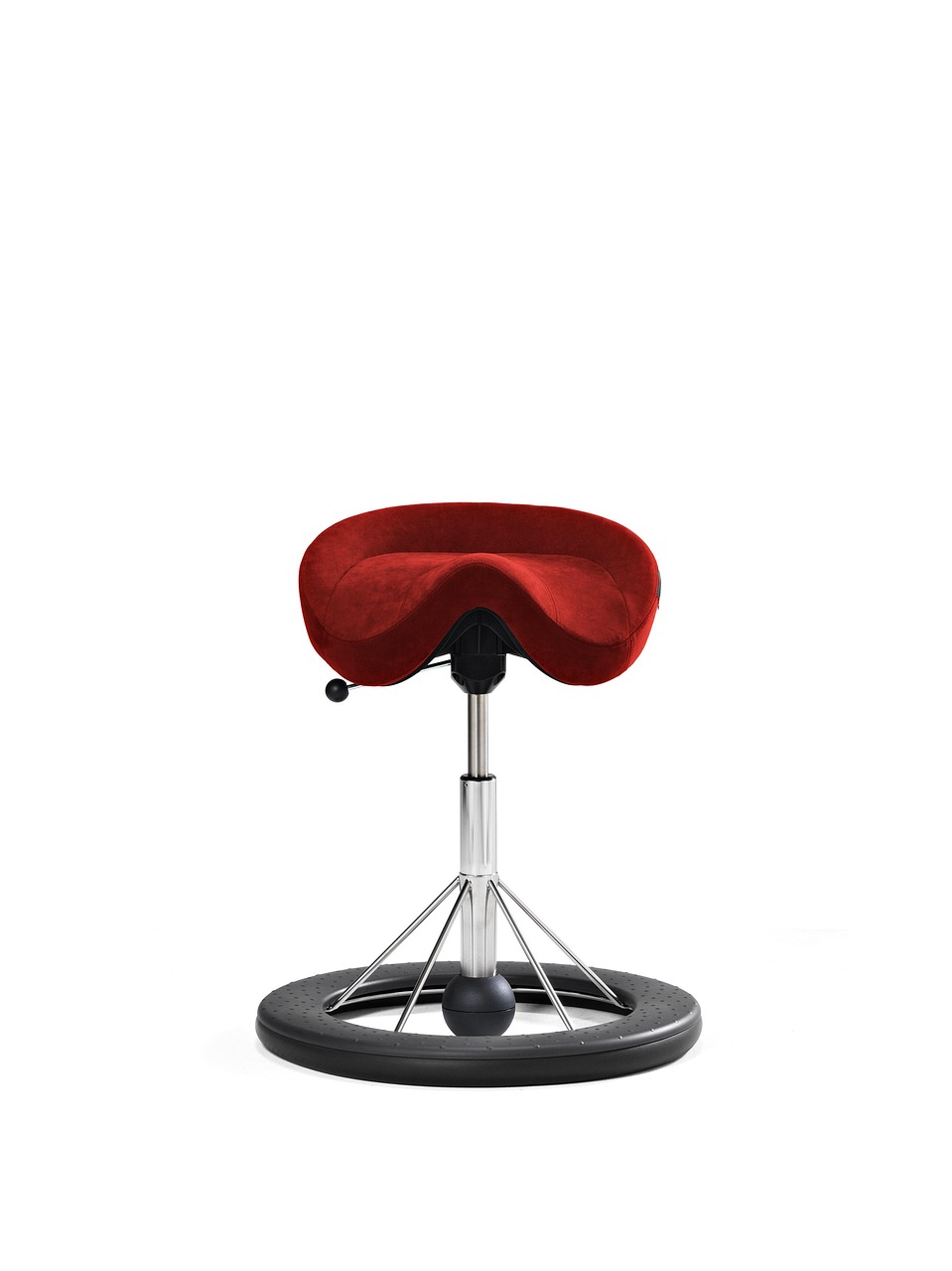
The Sway Fit is the stool I point people to first, and the reason is the seat. Salli splits the saddle into two independent halves that move with each sitting bone, so when you lean left, the left pad follows you down while the right pad stays level. On a single-piece saddle, that same lean lifts one hip and rolls the pelvis, which is exactly the twist a saddle seat is supposed to prevent. The forward tilt places your thighs below your hips, and your spine finds a neutral curve without a backrest pressing into it.
Salli sizes the Sway Fit by rider height and seat width, with options covering roughly 4 foot 6 to 6 foot 5 and seat widths from about 16 inches to 20 inches. The gas spring delivers around four inches of height travel depending on which cylinder you order, and the spec sheet lists a 264 pound maximum user weight. Upholstery is a wipe-clean synthetic over foam, and you choose either a caster base or a gliding base. Casters for hard floors, gliders for carpet.
Two things to accept before you buy. You will not sit still on it, and that is the design working as intended, but it also means a saddle stool is a poor choice for long video calls where you want to look anchored. There is no backrest, so hour three will introduce you to muscles you forgot you had. Plan on 20 minute blocks for the first two weeks and build from there. It also costs several times what a generic saddle stool does.
If your day splits between a fixed desk and an adjustable one, this is the stool that works at both. Check the Salli Sway Fit on Amazon to see the current sizes and base options.
Key strengths:
- ✅ Two-part seat lets each hip move independently, which keeps the pelvis level when you shift weight
- ✅ Sized by rider height and seat width, so tall and short users both get a workable fit
- ✅ Gas spring height adjustment of roughly four inches covers standard desks and drafting tables
- ✅ Wipe-clean upholstery and a low-maintenance base with no fabric to stain
- ❌ Premium price compared with single-piece saddle stools
- ❌ No backrest at all, so it is unsuitable for anyone who needs lumbar support
- ❌ Expect a two to three week adaptation period before it feels natural
Who it’s for: Choose this if you want the most adjustable saddle stool and you are willing to build up your sitting tolerance gradually.
2. Bambach Saddle Seat , Best Fitted Saddle Seat for Posture Retraining
Bambach has been building this seat for decades and it shows in the shell. The seat is a single molded piece with a deep, rounded front edge that lets your thighs drop away from the torso and a raised rear lip that catches your sitting bones. It is the closest thing to a clinical fitting in a box, and physiotherapists in Australia and the UK have recommended it for years. The angle is fixed, so the seat itself does the posture work rather than a mechanism.
Fit comes in three seat sizes, and the gas lift runs about six inches of travel, which is enough to move the same stool between a 29 inch desk and a drafting table. The shell is molded polyurethane over a steel frame, the casters lock, and Bambach lists a maximum user weight around 265 pounds. Covers come off for washing, which matters if you run warm or work in a room without air conditioning.
The molded bucket shape is not for everyone. Riders with narrow hips or short thigh bones sometimes find the front edge digs into the underside of the thighs, and the deep seat makes it harder to perch on the front lip the way you can on a flatter saddle. It is also the most expensive stool in this roundup, and the optional backrest costs extra.
Buy this one if you want a fitted seat and you are willing to measure yourself properly first. If you are still working out your desk height, read our how to set up an ergonomic workstation guide before you order, because a saddle at the wrong height is worse than a plain chair.
Key strengths:
- ✅ Molded shell with a rounded front edge supports the sitting bones and drops the thighs cleanly
- ✅ Roughly six inches of gas lift travel, one of the widest ranges in this category
- ✅ Three seat sizes plus a washable cover and locking casters
- ✅ Long track record with physiotherapists and occupational therapists
- ❌ Highest price of any stool here, and the backrest is an added cost
- ❌ The deep bucket shape does not suit every hip width or femur length
- ❌ Fixed seat angle means no fine tuning if it does not feel right on day one
Who it’s for: Pick the Bambach if you want the seat geometry, not the mechanism, to correct your posture and you will pay for a proper fit.
3. Varier Variable Balans , Best Kneeling Chair
The Variable Balans is the kneeling chair most people picture when they hear the term: two curved laminated beech runners, a tilting seat, and a pair of knee pads that carry part of your weight. Varier has built it in Norway since the 1970s and has changed almost nothing, which tells you the geometry works. The base rocks, so you can shift forward and back without standing up, and that rocking motion is what keeps your spine moving.
The frame is seven layers of laminated beech, and the whole chair weighs about 15 pounds, light enough to carry between rooms with one hand. There is no height adjustment at all. One size, one seat height, and Varier lists a maximum user weight around 240 pounds. The knee pads are upholstered, the seat tilts you forward roughly 20 degrees, and the runners have a natural stop so you cannot tip past a safe angle.
Honest downsides. With no adjustment you have to match the chair to your desk rather than the other way around, and anyone over about 6 foot 2 will feel cramped. Your shins take real pressure through the pads, which is uncomfortable for the first week and stays uncomfortable for some people permanently. Kneeling for a full eight hour day is not what this chair is built for, and the wood finish will not survive being shoved under a desk repeatedly.
This is the right pick if you want a second seat that gets you out of your main chair for 30 to 60 minute stretches. Check the Varier Variable Balans on Amazon to compare finishes and current listings.
Key strengths:
- ✅ Rocker base keeps you moving instead of locking you into one angle
- ✅ Seven-layer laminated beech frame with a decades-long production history
- ✅ Weighs about 15 pounds, so moving it between rooms is easy
- ✅ Tilts you forward about 20 degrees without loading your tailbone
- ❌ No height adjustment whatsoever, so desk height has to match the chair
- ❌ Knee pads put sustained pressure on the shins and take weeks to tolerate
- ❌ Taller riders and anyone over the listed 240 pound limit are excluded
Who it’s for: Buy this if you want a well-built kneeling chair for short daily stretches rather than an all-day seat.
4. Sleekform Austin , Best Budget Kneeling Chair
The Austin is the kneeling chair most people actually buy, and the gas lift is the reason. Instead of the fixed frame you get on a Varier, Sleekform puts the seat and knee pads on a single column that raises and lowers, so you can match it to your desk and your own leg length. That one feature removes the biggest complaint about kneeling chairs, which is that they only fit one body size.
The spec sheet lists a 250 pound weight capacity and roughly eight inches of height travel, which covers most standard desks and a wide range of riders. Cushions are thick foam, advertised at about three inches on the seat and two on the knee pads, and the frame is powder-coated steel. Locking casters are included, along with the Allen key you need to bolt it together in about 20 minutes.
The compromises live in the details. The foam compresses noticeably after a year of daily use, the casters are the cheapest part of the build, and the gas lift on budget kneeling chairs can develop a slow sag over time. Upholstery choices are limited to a few dark fabrics. If you want a slightly heavier version of the same idea, the DRAGONN kneeling chair is worth a look before you commit.
Choose the Austin if you want to test whether kneeling suits your body before spending saddle stool money. It is also the easiest stool here to hand to a guest or a teenager who needs a cheap fix for a bad setup.
Key strengths:
- ✅ Gas lift gives roughly eight inches of height adjustment for a budget price
- ✅ Thick foam cushions on both the seat and the knee pads
- ✅ Assembles in about 20 minutes with the included Allen key
- ✅ Works at a standard fixed desk without needing a keyboard tray
- ❌ Cushion foam flattens faster than the padding on premium kneeling chairs
- ❌ Casters and gas lift are the weak points of the build
- ❌ Limited upholstery options and no sizing beyond the gas lift range
Who it’s for: Get the Austin if you want to try kneeling on a tight budget or need a second seat for occasional use.
5. Aeris Swopper , Best Active Sitting Stool
The Swopper is not really a stool in the traditional sense. It is a spring column with a small padded seat on top, and it moves in three dimensions: up and down, side to side, and forward and back. Sit on it and your core switches on within a minute, because you cannot stay balanced without working for it. That is either the best thing about the stool or the reason you send it back.
Aeris offers three spring stiffness settings, and you swap or adjust them to match your body weight so the seat sinks roughly three inches at rest instead of bottoming out. Lateral travel runs to about 15 degrees in any direction. The column is steel with fiberglass-reinforced plastic at the base, the height adjusts through a gas lift, and the listed maximum user weight is 264 pounds. The seat pad is deliberately small and firm.
Two things push people away. The bouncing is loud enough to notice in a quiet office and visible on video calls, and the price is high for something with no backrest and almost no cushion. It also demands more core endurance than a saddle stool, so an untrained back will feel it for the first week. Anyone with an active disc problem should get clearance before using one.
Buy the Swopper if you already have a sit-stand rhythm and want to add movement to the seated half of your day. If you are still building that habit, our best standing desks of 2026 roundup is the better starting point.
Key strengths:
- ✅ Three-axis movement keeps the spine and core working the entire time you sit
- ✅ Three spring tensions let you tune the feel to your body weight and preference
- ✅ Gas lift height adjustment covers standard desk heights
- ✅ Steel column with a fiberglass base handles a 264 pound user
- ❌ Bouncing is audible in quiet offices and obvious on video calls
- ❌ Small firm seat with no backrest, so long sessions are out of the question
- ❌ Highest core demand of any stool here, which rules out some users
Who it’s for: Choose the Swopper if you want constant movement and you already alternate between sitting and standing through the day.
6. UPLIFT Motion Stool , Best Perch Stool for Standing Desks
A perch stool sits between sitting and standing. You lean back against a small seat at hip height with your feet on the floor, taking maybe 30 percent of your weight through the seat, and your spine stays closer to standing alignment than it ever does in an office chair. That is why perch stools pair so well with a height-adjustable desk used in short bursts rather than all day.
The UPLIFT Motion Stool uses a pneumatic cylinder that covers both proper seated heights and perch heights, with a foot ring to stop your feet from dangling when the seat is high. The seat is contoured rather than flat, and the frame sits on a five-leg base with casters. UPLIFT publishes the weight capacity and warranty terms for the stool on its product page, and the desk line carries a 15 year warranty, which is the longest in the office furniture business.
What it cannot do is support you. There is no lumbar support, no armrests, and no way to make this comfortable for a four hour stretch. The foot ring is fixed in place, so tall and short riders get different amounts of benefit from it. And it only makes sense if you already own an adjustable desk, because a fixed 29 inch surface will leave you leaning at an awkward angle.
Get the Motion Stool if you stand for 20 to 40 minutes at a time and want somewhere to land that is not a full chair. Adding a footrest helps when you use it in a lower seated position, because the ring alone is not enough support for a long stretch.
Key strengths:
- ✅ Pneumatic range covers both seated heights and full perch heights
- ✅ Foot ring keeps your feet supported when the seat is raised
- ✅ Contoured seat distributes your partial weight better than a flat pad
- ✅ Made by a company with the longest warranty in the category on its desk line
- ❌ No lumbar support or armrests, so it is unusable for long stretches
- ❌ Fixed foot ring height suits some riders far better than others
- ❌ Pointless if you do not already own a height-adjustable desk
Who it’s for: Buy this if you already use a standing desk and want a leaning seat for the in-between moments.
Frequently Asked Questions
Is a saddle stool better than a regular office chair?
For part of the day, yes. A saddle seat puts your hips above your knees and tilts the pelvis forward, which restores the natural curve of your lower back without a backrest forcing it. For a full eight hour day it is worse than a good chair, because there is no lumbar support and your core muscles fatigue. Use one for two to four hours and rotate back.
How long should I sit on a kneeling chair each day?
Start with 20 minute blocks and work up to 30 to 60 minutes at a stretch. Kneeling chairs shift weight onto your shins through the knee pads, and that pressure becomes uncomfortable long before your back does. Most people use them as a second seat rather than a primary one.
What height should an ergonomic stool be set to?
Set it so your thighs slope down about 10 to 15 degrees and your hips sit slightly higher than your knees. Your feet should rest flat on the floor or on a footrest ring. Then raise or lower the desk until your elbows sit at roughly 90 degrees.
Do ergonomic stools help with lower back pain?
They can reduce the disc pressure that comes from a fixed 90 degree hip angle, and many users report less ache in the lower back. They are not a treatment. If you have ongoing pain, get it assessed before you change equipment, because the wrong seat angle can make an existing problem worse.
Can I use a saddle stool with a normal fixed desk?
Yes, as long as the desk surface sits around 28 to 30 inches. A saddle raises your hips roughly four to six inches compared with a standard chair, so a fixed desk that felt fine with a chair will feel too low. If the stool cannot go low enough, add a keyboard tray instead of lowering the desk.
Do kneeling chairs hurt your knees?
They put pressure on your shins and the front of your knees, not the joint itself, and many people find it uncomfortable for the first week or two. Anyone with knee or shin problems should test one before buying. Build tolerance slowly and keep sessions short.
What Should You Remember?
- Match the hip angle first: a stool only helps if your hips sit higher than your knees, so measure your desk height before you order anything.
- Build tolerance in 20 minute blocks: backless seats load your core and shins, and jumping straight to a full day is how people give up on them.
- Check the weight limit: a stool carries your entire body weight through a small seat pad, so the rated capacity matters more than it does on a chair.
- Kneeling chairs are a second seat, not a primary one: plan on 30 to 60 minute stretches and keep your regular chair nearby.
- Perch stools belong with standing desks: if you already alternate between sitting and standing, a leaning seat is the cheapest upgrade you can make.
- Height adjustment separates good stools from bad ones: fixed-height kneeling chairs work only if your body and your desk happen to agree.
This article is for general information only and is not medical advice. Ergonomic guidance varies by body type and underlying conditions. Consult a physician or physical therapist for persistent pain before changing your workstation.